


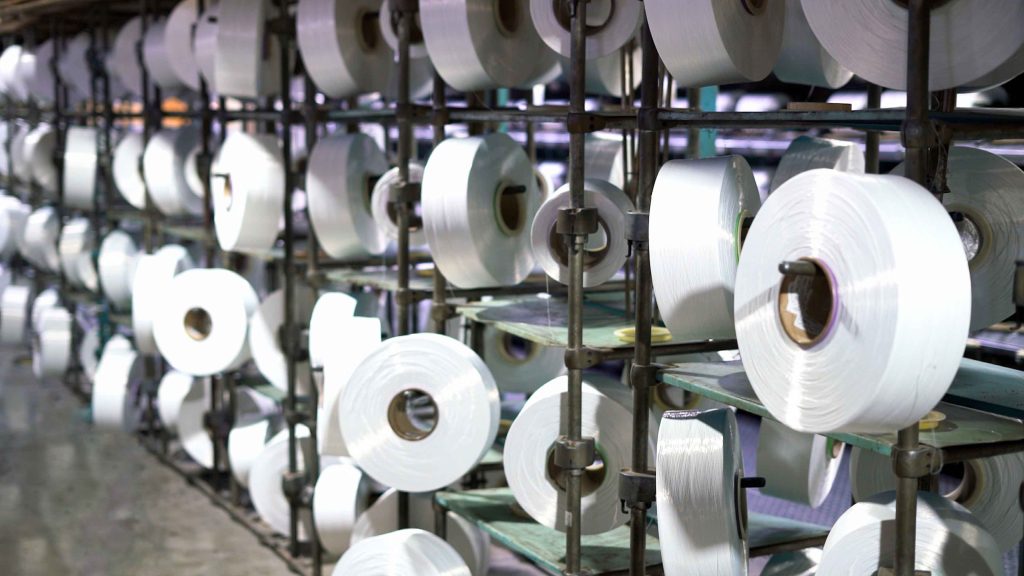
Why is quality control important in yarn production?
In the competitive world of the textile industry, just producing yarn is not enough; producing yarn with uniform, durable and flawless quality is the secret to the success of brands that want to remain in the market. In the meantime, quality control plays a key role in maintaining and improving production standards.
In this article, we will examine the reasons for the importance of quality control in yarn production, the stages of this process, and its impact on customer satisfaction and the final performance of the fabric.
What is quality control?
Quality control is a set of methods and standards that are carried out to check and guarantee the quality of the final product. This process continues from the beginning of the supply of raw materials to the product leaving the factory.
Why is quality control important in yarn production?
 Maintaining uniformity in the produced yarn is one of the effective factors in the quality of the fabric, the uniformity of the yarn. Any change in the thickness (count), twist or density of the yarn in the weaving or dyeing process can cause defects in the fabric. Quality control prevents these problems by regularly checking these factors.
Reducing waste in the production line Poor quality yarn leads to breakage, jamming of machinery, or product returns, which increases both cost and production time. With strict quality control, the waste rate is minimized.
Customer satisfaction and brand retention Customers choose brands that have consistency in quality. If the quality of yarn varies, the likelihood of losing loyal customers increases. Quality control ensures that each roll of yarn meets the promised standards.
Compliance with international standards For exporting yarn or cooperating with reputable foreign companies, compliance with international standards such as ASTM, ISO or OEKO-TEX is essential. Quality control paves the way to achieving these certificates.
Quality control steps in professional yarn spinning factories such as Mumtaz Nakh are carried out in the following different stages:
Raw material inspection: Before the fibers (for example, cotton or polyester) enter the production line, they are checked for moisture, purity, length and fineness.
Spinning process monitoring: During spinning, the machines and the output yarn are continuously monitored for twist, tension, thickness, and breakage.
Laboratory testing: In the laboratory, samples of the produced yarn are examined for tests such as tensile strength, twist (TPI), fluffiness, moisture content, uniformity, and dyeability.
Final inspection and packaging: Before packaging and shipping, each bobbin or roll of yarn is inspected for appearance, weight, and color uniformity.
📈 The end result: Consistent quality = more confidence
Producing yarn without a quality control system is like building a building without a supervising engineer. The work may go ahead, but the result will not be reliable. At Mumtaz Nakh Company, we believe that quality control is not just a part of production, but the beating heart of the factory.
📞 Are you looking for high-quality and tested yarn?
Contact Mumtaz Nakh sales team to get more complete information about the types of yarns ready for high-quality production.
